Overview
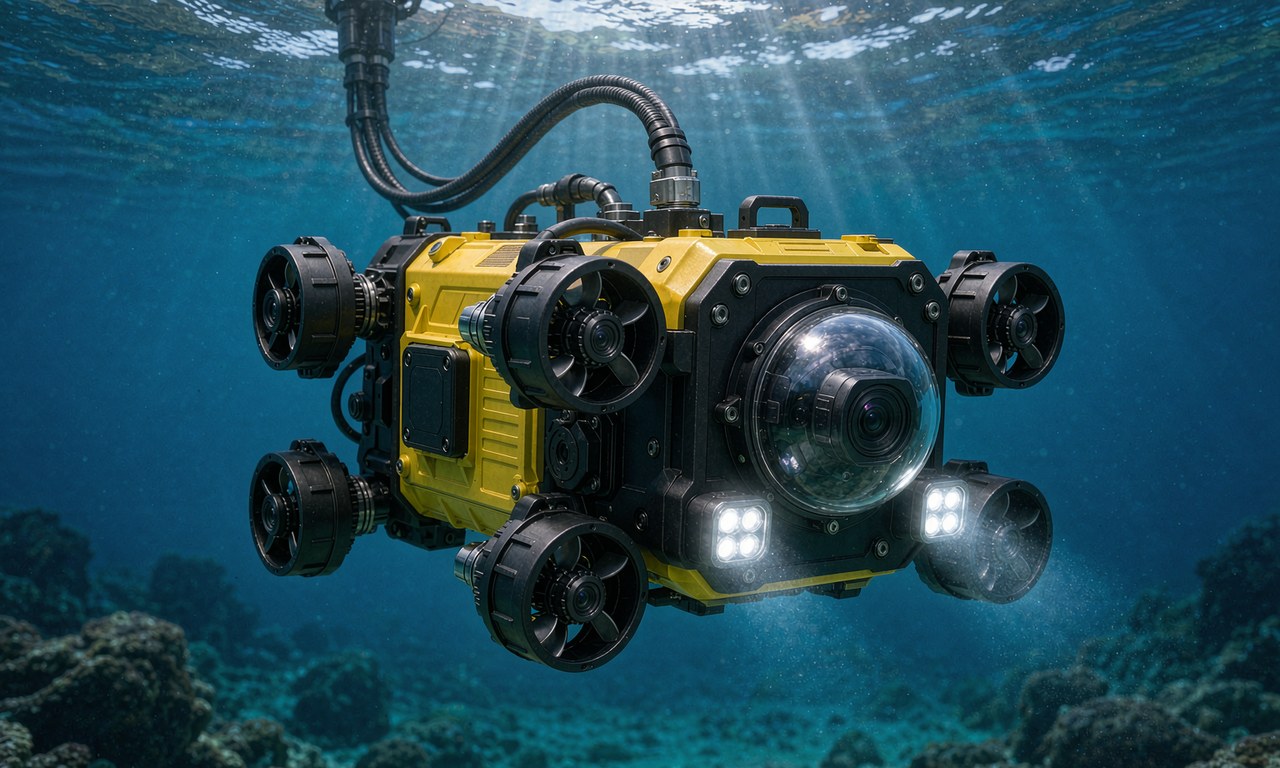
For scheduled inspection and defect surveys of dam bodies and toe slabs, bridge piers and pile caps, intake and outfall pipelines, hulls and underwater structures, ports and subsea pipelines. The six-thruster omnidirectional layout supports hover, lateral translation and turn-in-place, holding a stable viewing attitude in current and confined spaces — noticeably more controllable than four-thruster vehicles when working on vertical and overhead surfaces.
A 4K low-light camera with dual 2000 lm dimmable lights resolves millimetre-scale cracking and spalling in clear water; in turbid water or over silt it switches to sonar imaging, so work is not halted when visibility drops to zero. Depth, temperature, leak detection and attitude sensors log throughout, tying every defect to a position and orientation.
An optional 5-DOF manipulator provides recovery and light intervention capability — clearing entanglements or retrieving detached components. USBL acoustic positioning binds each dive track to defect positions, so with the structure drawings the defects can be marked directly onto a 3D model — the step that turns an inspection result into a buildable work order.
A 300 m tether supplies continuous power for long inspections without surfacing, with combined power and data conductors and verified tensile strength. An optional laser scale and thickness probe supports corrosion-allowance assessment. The system ships with a portable control cabinet and a tether winch; two people can complete deployment.